Free market interactions led to the emergence of gold as money. Gold was divisible, durable, recognizable, and most importantly, difficult to inflate. Thus, it maintained its purchasing power better than other commodities that were easier to produce.
However, gold suffered from certain drawbacks. While it was divisible, dividing it physically was practical only to a certain point. Also, carrying it in large quantities was costly and cumbersome. Furthermore, verifying the authenticity of gold coins and bars was time-consuming.
To address these drawbacks, banks began offering banknotes which were redeemable for the gold they stored. Banknotes could have arbitrarily small or large face values, making moving various quantities of value easy. Banks were tasked with verifying the quality of gold and conducting final gold settlement amongst banks.
The issuing of banknotes, however, always carried a moral hazard. The unlikelihood of every depositor simultaneously demanding redemption tempted banks to print more banknotes than they possessed the gold to redeem. So they did. And various bank failures followed.
Governments took over the money printing business using the pretext of providing stability. But why would governments not succumb to the very temptations that plagued bankers? History has shown us that governments, with their coercive powers and the ability to transfer the consequences of their actions onto helpless citizens, can be trusted with money less than bankers formerly disciplined by the market.
The collapse of money in the west took place in stages. Below are some notable landmarks. Notice how with every government intervention, the purchasing power of the monetary tokens handed to the common public falls against real money.
The Original Definitions of Pound and Dollar
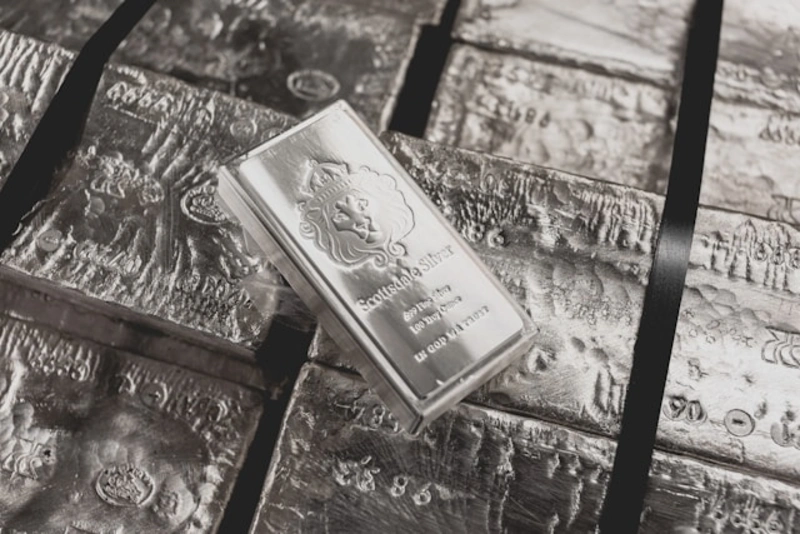 The medieval definition of a pound (the British Pound) was literally one “Tower pound of Sterling silver,” which translated to 323.75 grams of pure silver. By the early 1700s, one pound was around 111.5 grams of pure silver. In 1717, Isaac Newton, the Master of the Mint, set one pound to 7.99 grams of pure gold.
Similarly, the dollar (US Dollar) was originally defined in terms of a specific mass of silver. The Coinage Act of 1792 set one dollar to 24.057 grams of pure silver. This was equivalent to 1.604 grams of gold.
The Classical Gold Standard
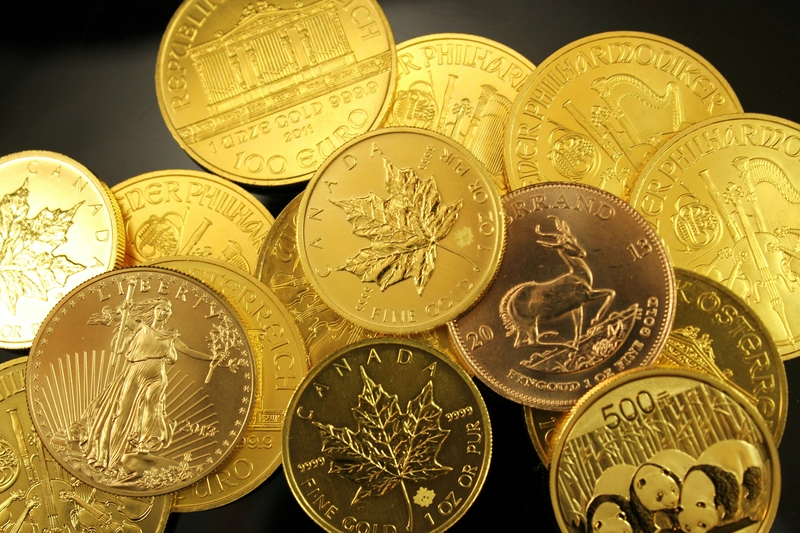 The Gold Standard Act of 1816 formally moved Britain into the gold standard. One pound was now 7.322 grams of pure gold.
The Coinage Act of 1834 redefined one dollar as 1.503 grams of gold. In 1837, it was redefined as 1.5046 grams of gold. The Gold Standard Act of 1900 formally established the gold standard in the US. (1900 Dollar = 93.8% of 1792 Dollar.)
The classical gold standard broke down during World War I. The warring governments of Europe inflated the supply of their currencies well beyond the point where they could maintain redeemability at pre-war levels.
The Gold Exchange Standard
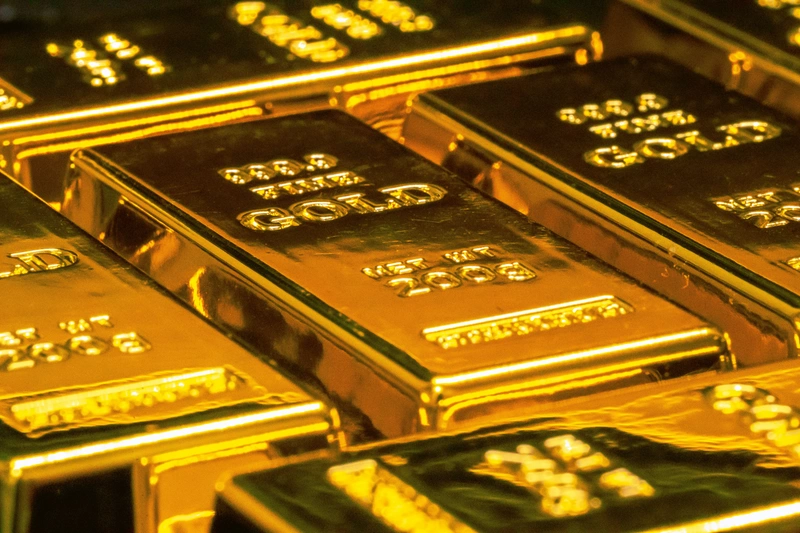 After the 1922 Genoa Conference, the world moved to a pseudo-gold standard. The US, which had entered the war late, remained on the classical gold standard. Following the Gold Standard Act of 1925, Britain started redeeming pounds only in dollars and 12.4 Kg gold bars, effectively cutting out ordinary citizens from using gold for day-to-day transactions. Other countries redeemed their currencies in pounds.
In 1933, the classical gold standard ended in the US following Franklin Roosevelt’s Executive Order 6102, which coerced Americans to surrender their gold at 1.5046 grams per dollar. Soon thereafter, the Gold Reserve Act of 1934 devalued the dollar to 0.8887 grams of gold. (1934 Dollar = 55.4% of 1792 Dollar.)
Effectively, only nation states were able to transact using gold at this point.
The Bretton Woods Agreement
 World War II ended the gold exchange standard and the dominance of the British pound. The 1944 Bretton Woods Conference and the subsequent ratification of the agreement in 1945 made the US dollar the sole key currency of the world. The dollar was redeemable only to foreign governments at 0.8887 grams of gold per dollar.
Redemption to foreign governments led to a rapid drain of the US gold reserves from a peak of 21,700 metric tonnes in 1948 to 9,800 metric tonnes in 1970. By 1973, the free market price had risen to 0.2488 grams of gold per dollar, but governments continued to ignore it. (1973 Dollar = 15.51% of 1792 Dollar.)
The Fluctuating Fiat Currencies Era
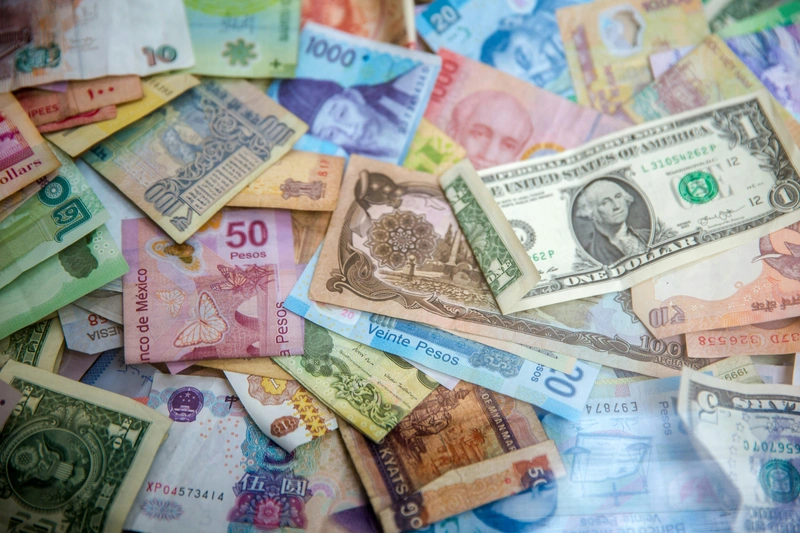 In 1971, Richard Nixon suspended gold convertibility. The 1971 Smithsonian Agreement and the corresponding Par Value Modification Act of 1972 officially devalued the dollar to 0.8185 grams of gold and pegged various currencies to the dollar.
The currency pegs broke shortly afterward and the world entered the era of fluctuating fiat currencies in 1973. The US government decreed a statutory price for gold at 0.7366 grams per dollar, a position it maintains to this date. Note that the free market price for gold increased from a 1973 rate of 0.2488 grams per dollar to a 2000 rate of 0.1072 grams per dollar. (2000 Dollar = 6.68% of 1792 Dollar.) Today, in mid-2026, gold costs 0.0073 grams per dollar. (2026 Dollar = 0.73% of 1792 Dollar.)
Reference
- Rothbard, Murray. What Has Government Done To Our Money? Chapter 3.
Photo Credits
- Photo of silver bars by Scottsdale Mint on Unsplash.
- Photo of gold coins by Zlaťáky.cz on Unsplash.
- Photo of gold bars by Jingming Pan on Unsplash.
- Photo of Mount Washington Hotel, the venue for the Bretton Woods Conference, by rickpilot_2000. Photo licensed as CC BY 2.0.
- Photo of various banknotes by Jason Leung on Unsplash.